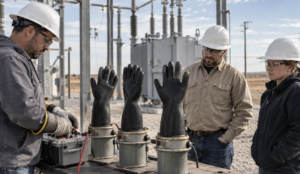
Electrical safety rarely draws attention when systems are working as intended. Yet behind dependable power, functioning equipment, and safer workplaces is a network of inspections, maintenance practices, protective equipment, and testing procedures designed to identify hazards before they become emergencies. Across Oklahoma, workplace safety remains an important concern for public agencies, private employers, utilities, contractors, industrial facilities, and the skilled professionals who work around energized electrical systems.
For businesses and organizations in El Reno and surrounding communities, dielectric testing has an important place within that safety picture. The process evaluates whether insulating materials and electrical protective equipment can withstand specified electrical stresses without failing. Rubber insulating gloves, sleeves, blankets, line hose, tools, and other protective equipment may stand between a worker and a potentially dangerous electrical source.
Oklahoma’s emphasis on workplace and electrical safety can be seen across several state programs. The Oklahoma Department of Labor maintains workplace safety programs for employers and workers, while federal standards administered by the Occupational Safety and Health Administration establish detailed requirements for electrical protective equipment. Together, these resources illustrate why preventive testing and equipment maintenance remain important components of electrical safety.
Electrical Safety Has a Direct Connection to Oklahoma Workplaces
Oklahoma has a diverse economy that includes energy production, utilities, manufacturing, construction, transportation, agriculture, public infrastructure, telecommunications, and numerous service industries. Many of these sectors depend on electrical systems every day.
Electrical hazards differ from many ordinary workplace hazards because damage to protective equipment is not always obvious. A glove, sleeve, blanket, or insulating device can appear usable during a quick inspection while its insulating properties have deteriorated. Age, contamination, punctures, improper storage, chemical exposure, heat, sunlight, mechanical damage, and repeated use can all affect protective equipment.
The Oklahoma Department of Labor Workplace Safety program emphasizes preventing accidents and protecting workers through hazard identification, consultation, education, and safety programs. The department notes that workplace injuries can create consequences for both employees and employers, including lost work time, reduced productivity, medical costs, turnover, and workers’ compensation expenses.
Electrical safety fits directly into that broader prevention strategy. Rather than relying solely on how a piece of protective equipment looks, dielectric testing provides a controlled method of determining whether the equipment can continue to perform its insulating function under specified conditions.
Dielectric Testing Helps Verify Electrical Protective Equipment
Dielectric testing generally involves applying a specified electrical voltage to insulating equipment under controlled conditions. The purpose is to determine whether the material can withstand the electrical stress associated with its intended use.
This testing can be particularly important for companies whose employees work near energized equipment. Rubber gloves and sleeves, for example, are designed to provide electrical insulation, but their protective value depends on their condition and ability to withstand voltage.
The federal Occupational Safety and Health Administration electrical protective equipment standard states that proof testing must reliably indicate that protective equipment can withstand the voltage involved. OSHA also establishes requirements covering the condition, care, inspection, and periodic electrical testing of specified types of insulating equipment.
For organizations looking for specialized regional testing, Dielectric Testing El Reno OK provides information about dielectric testing services serving the El Reno area.
Testing adds another layer of verification to a safety program. Visual inspections remain important, but electrical testing can identify performance concerns that a visual check alone may not reveal.
Oklahoma Government Programs Reinforce a Prevention-Based Safety Culture
Oklahoma’s state government maintains several programs connected with workplace and electrical safety. The Oklahoma Department of Labor’s Public Employees Occupational Safety and Health program, commonly known as PEOSH, covers public employers such as state agencies, cities, counties, and public schools.
According to the Oklahoma Public Employees Occupational Safety and Health program, public employers have responsibilities to provide safe and healthful workplaces. The program conducts investigations and provides consultation, training, outreach, and other resources intended to reduce occupational injuries and illnesses.
Private-sector employers in Oklahoma generally operate under federal OSHA jurisdiction, while Oklahoma administers occupational safety programs for public-sector workers through PEOSH. That structure makes safety a shared responsibility involving federal standards, state oversight, employers, supervisors, safety professionals, contractors, and workers.
The larger point is straightforward. Preventive safety measures are more effective when they are built into routine operations rather than treated as responses to an incident.
Electrical Protective Equipment Requires More Than a Visual Check
Visual inspection is essential, but insulating equipment has performance characteristics that cannot always be judged by appearance.
OSHA guidance for insulating gloves and sleeves states that the equipment must be electrically tested before being issued for use and inspected for defects such as holes, tears, punctures, embedded objects, changes in texture, and other conditions that can affect insulation. OSHA also identifies periodic electrical testing requirements for gloves and sleeves.
That distinction is important. A worker may see a clean rubber glove and reasonably believe it remains suitable for service. Dielectric testing provides objective evidence about whether its insulating properties meet applicable testing criteria.
For electrical contractors, utilities, maintenance departments, industrial operations, municipalities, and organizations responsible for electrical infrastructure, documented testing can also support a more organized equipment-management program. Companies can track when equipment was tested, when another test may be required, and whether individual pieces should remain in service.
Oklahoma Electrical Regulation Adds Another Layer of Safety
Oklahoma also regulates electrical trades through the state’s Construction Industries Board. The Oklahoma Construction Industries Board electrical industry resources provide information covering electrical apprentices, journeymen, contractors, licensing, continuing education, regulations, and electrical safety.
The state requires electrical apprentices to complete continuing education that can include adopted codes, Oklahoma electrical regulations, and electrical safety.
That regulatory structure reflects a broader principle found throughout electrical work: qualifications, proper procedures, appropriate equipment, maintenance, and testing all contribute to controlling risk.
Oklahoma’s Construction Industries Board describes its broader mission as protecting life and property through regulation of construction-related trades. Electrical work is one of the trades within that framework.
Electrical Codes Continue to Evolve in Oklahoma
Safety requirements do not remain frozen in time. Codes, standards, equipment, training practices, and testing procedures continue to develop as technology and industry knowledge advance.
The Oklahoma Uniform Building Code Commission establishes minimum statewide building codes affecting the built environment with the stated purpose of protecting life, property, public health, safety, and welfare. The commission maintains technical review processes involving various construction codes, including electrical standards.
Oklahoma adopted the 2023 National Electrical Code effective September 14, 2024, according to the Construction Industries Board.
The continuing review of codes demonstrates why companies involved with electrical work must remain attentive to current requirements rather than relying indefinitely on procedures established years ago. Protective equipment programs should receive the same attention.
A strong electrical safety program evolves with the workplace.
Why El Reno Businesses Benefit From Local Access to Testing
El Reno’s location west of the Oklahoma City metropolitan area places area employers within an active regional economy involving construction, transportation, public services, industrial operations, utilities, agriculture, commercial facilities, and infrastructure.
When electrical protective equipment requires testing, access to a testing provider can help businesses incorporate testing into their normal safety and maintenance schedules. The practical value extends beyond compliance. Reliable equipment helps workers perform their jobs with greater confidence that the protective devices assigned to them have undergone appropriate evaluation.
For employers, organized testing can also reduce uncertainty about equipment condition. A clearly documented process creates a better foundation for deciding whether an item should return to service or be removed.
Testing does not replace proper employee training, safe work practices, lockout procedures, inspections, equipment maintenance, or other safeguards. It strengthens the larger system by addressing one of its most important elements: the condition of insulating protective equipment.
Government Safety Resources Help Oklahoma Employers Strengthen Programs
Businesses do not have to develop workplace safety programs without outside resources. Oklahoma maintains consultation programs designed to help employers identify hazards and improve safety practices.
The Oklahoma OSHA Consultation Services program offers free and confidential consultation services to Oklahoma employers. The program is intended to help companies identify hazards, strengthen safety and health management practices, and understand applicable OSHA standards.
Resources of this kind can be valuable for smaller employers that may not maintain large in-house environmental health and safety departments. They can also help established organizations review procedures that have been in place for years.
Electrical safety is strongest when employers combine multiple layers of protection, including qualified personnel, training, proper equipment, inspections, testing, documentation, hazard analysis, and clear procedures.
Electrical Safety Supports Oklahoma’s Broader Public-Safety Mission
The connection between government oversight and workplace safety extends across numerous agencies, boards, and commissions. Oklahoma’s state government contains a wide network of public bodies responsible for different aspects of regulation and public administration, as outlined in the Wikipedia overview of the Government of Oklahoma.
Within the workplace safety arena, state and federal organizations establish standards and provide information, while employers remain responsible for applying those requirements to actual working conditions.
That division of responsibility matters because electrical safety ultimately takes place at the worksite. Regulations can establish expectations. Training can teach correct procedures. Testing can verify equipment. Supervisors can enforce practices. Workers can inspect protective gear before use. Each element contributes to the same goal of preventing injuries and keeping electrical hazards under control.
Preventive Testing Can Protect People, Equipment, and Operations
An electrical incident can affect far more than one piece of equipment. Depending on the circumstances, it can result in worker injuries, equipment damage, operational interruptions, investigations, increased costs, and extended downtime.
Preventive testing is intended to identify weaknesses before protective equipment is placed in a situation where failure could have serious consequences.
OSHA’s safeguards for personnel protection require employees exposed to potential electrical hazards to use electrical protective equipment appropriate for the work being performed. The standard also requires protective equipment to be maintained in a safe and reliable condition and periodically inspected or tested when applicable.
For organizations around El Reno, maintaining a dependable testing schedule can therefore become part of a broader risk-management strategy. It encourages companies to treat protective equipment as safety-critical equipment rather than ordinary supplies.
A Stronger Safety Culture Begins Before an Incident
Some of the most valuable safety work happens quietly. A glove passes inspection. A damaged sleeve is removed from service. A testing schedule is updated. Employees complete training. A supervisor identifies a hazard before work begins. None of these actions generates dramatic headlines, yet each one can prevent a far more serious event.
That preventive mindset is particularly appropriate for electrical work because electricity offers little margin for careless assumptions. Equipment should be selected correctly, stored correctly, inspected correctly, tested when required, and used by people who understand its purpose and limitations.
Companies that make these practices routine create a workplace culture where safety is part of daily operations rather than a reaction to accidents.
Conclusion
The growing attention given to workplace safety throughout Oklahoma provides important context for the role of dielectric testing in El Reno. State agencies, federal regulators, construction-industry programs, safety consultants, employers, contractors, and workers all contribute to reducing electrical hazards.
Dielectric testing serves a specific but important function within that system. It helps determine whether insulating protective equipment can continue performing the job it was designed to do. For workers who depend on rubber gloves, sleeves, blankets, line hose, and other insulating equipment around electrical hazards, that verification can be significant.
As electrical systems, equipment, regulations, and industry standards continue to evolve, preventive testing will remain an important component of responsible electrical safety programs. El Reno businesses and public organizations that combine equipment testing with proper training, inspections, maintenance, documentation, and established safety procedures are better positioned to protect employees and maintain reliable operations.
The strongest electrical safety programs are built long before an incident occurs. In El Reno and throughout Oklahoma, consistent attention to testing and prevention can help ensure that the protective equipment workers rely upon is ready when it matters most.