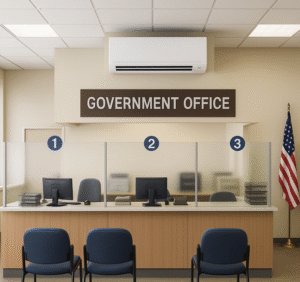
As the demand for energy efficiency and environmental responsibility grows, government offices across the country are being called to lead by example. One way to make a tangible, measurable impact? Investing in a heat pump air conditioner. This technology doesn’t just lower energy bills—it supports sustainability goals, improves indoor comfort for employees and visitors, and strengthens the long-term resilience of public infrastructure. In this article, we’ll explore exactly why heat pump air conditioners are a smart, future-forward investment for government facilities of all sizes 🏛️❄️🌱
The Future of HVAC Is Here: What Is a Heat Pump Air Conditioner?
Heat pump air conditioners are high-efficiency HVAC systems that both cool and heat a building using the same technology. Rather than generating heat through combustion, a heat pump transfers heat from one place to another. In cooling mode, it works like a traditional air conditioner—extracting heat from inside the building and releasing it outside. In heating mode, it does the opposite—pulling heat from the outdoor air (even in cold weather) and pushing it indoors.
This dual functionality makes heat pumps incredibly efficient year-round, often consuming far less energy than traditional systems. According to the U.S. Department of Energy, heat pumps can reduce electricity use for heating by approximately 50% compared to electric resistance heating such as furnaces or baseboard heaters.
Why Heat Pumps Make Sense for Government Offices
1. Energy Efficiency = Taxpayer Savings 💰
Government buildings operate year-round, often 10+ hours a day, five to seven days a week. Heating and cooling costs are among the largest expenses in public building management. A heat pump air conditioner can significantly cut energy usage, leading to cost savings that reduce the burden on taxpayers.
-
Fact: According to the Environmental Protection Agency (EPA), high-efficiency electric heat pumps can achieve 300%–400% efficiency, meaning they deliver three to four times more energy in heat than the electricity they consume.
-
Application: For city halls, courthouses, and DMV offices, upgrading to heat pumps means less money spent on energy—and more funds freed up for public services.
2. Year-Round Climate Control in One Unit 🌦️
Unlike traditional systems that require separate heating and cooling components, a heat pump offers both in one compact, integrated system. This simplifies installation, reduces maintenance, and eliminates the need for fossil fuel-based heating systems like gas furnaces or boilers.
-
Benefit for Government: Consolidating HVAC systems reduces complexity, repair costs, and management headaches—ideal for budget-conscious municipalities and public administrators juggling multiple properties.
3. Supports Carbon Reduction Goals ♻️
Many local, state, and federal agencies are now committed to carbon neutrality goals or climate action plans. Electrification—switching from fossil-fueled appliances to electric alternatives—is one of the most effective ways to decarbonize public buildings. Heat pump air conditioners are key to this transition.
-
Impact: According to the International Energy Agency (IEA), heat pumps could reduce global CO₂ emissions by 500 million tons by 2030 if adopted at scale.
-
Public Perception: Investing in this technology shows that the government isn’t just setting goals—it’s leading by example. It fosters public trust and demonstrates accountability.
4. Improves Indoor Air Quality for Employees & Visitors 🌬️
Heat pumps not only regulate temperature—they often come with built-in dehumidifiers and advanced filtration systems that remove dust, allergens, and pollutants. In buildings with older HVAC systems, air quality is often poor, which can affect employee productivity and public satisfaction.
-
Workplace Wellness: Clean, well-ventilated air contributes to fewer sick days, improved cognitive function, and a more welcoming environment.
-
COVID & Beyond: The pandemic spotlighted the importance of indoor air quality. Heat pump systems with proper ventilation and HEPA filtration can support safer public spaces.
5. Eligibility for Federal and State Incentives 💵
Government agencies can leverage available incentives for energy-efficient upgrades. The Inflation Reduction Act (IRA) and other federal programs offer rebates, tax credits, and grant funding for green infrastructure—including HVAC upgrades.
-
Example: Public entities may qualify for technical assistance and funding from the U.S. Department of Energy’s State and Community Energy Programs (SCEP).
-
Savings Opportunity: By acting now, offices can offset installation costs and stretch public dollars further.
Use Case Scenarios for Heat Pumps in Government Buildings
🏫 Schools & Universities
Heat pumps can stabilize temperatures across classrooms while reducing utility budgets. More importantly, students and faculty benefit from healthier air and quieter operations.
🏢 Courthouses & Administrative Buildings
With constant public foot traffic and varied room usage, these buildings need highly responsive, adaptable climate control. Heat pumps deliver consistent comfort and reliability without the disruptive noise or emissions of older units.
🏥 Health Departments & Clinics
For agencies involved in public health, indoor air quality and temperature control are non-negotiables. Heat pump systems can support the delivery of safe, sterile environments while aligning with overall health missions.
🛃 Border & Security Offices
Remote or high-demand federal offices can rely on ductless or mini-split heat pump systems to control temperature efficiently in hard-to-condition zones without massive infrastructure changes.
Overcoming Common Objections to Heat Pump Investment
“But heat pumps don’t work in cold climates!” ❄️
Not true anymore. Thanks to advancements in cold-climate heat pump technology, systems now function efficiently in temperatures as low as -15°F. The Northeast Energy Efficiency Partnerships (NEEP) maintains a list of systems rated for such conditions.
“We don’t have the budget.”
While the upfront costs can be higher, the return on investment through energy savings, reduced maintenance, and incentives can make up the difference in just a few years. Over time, heat pumps can save government offices thousands—if not millions—depending on the size and scale of the building.
“It’s complicated to install in older buildings.”
Modern ductless heat pump options (like mini-splits) make retrofitting easier than ever. They don’t require ductwork, which means even historic buildings can benefit without major renovations.
Long-Term Impact: Why It’s Worth the Switch
Investing in heat pump air conditioning isn’t just a trendy upgrade—it’s a foundational improvement with ripple effects across energy use, health, budgeting, and climate strategy. When government offices make this switch, they help normalize a cleaner, smarter approach to public infrastructure.
-
Environmental Leadership: Agencies can model environmental stewardship for their communities.
-
Cost Management: Lower energy bills help free up funds for education, public safety, transportation, and more.
-
Job Creation: Growing demand for heat pump installation and maintenance creates skilled labor opportunities in HVAC, construction, and green energy sectors.
Conclusion: The Public Sector’s Opportunity to Lead 🌟
The heat pump air conditioner represents more than a technical upgrade—it’s a commitment to smarter governance, healthier workspaces, and a more sustainable future. By investing in this technology, government offices are setting a powerful example of innovation, responsibility, and stewardship.
From improved comfort and efficiency to reduced emissions and long-term savings, the benefits are too substantial to ignore. This is the kind of bold, forward-thinking decision that builds trust, saves money, and helps shape the next generation of public service.
If you work in public facility management or influence infrastructure budgets, now is the time to advocate for this change. Your buildings—and your community—deserve the best. 💪🌎
Authority Links for Further Reading: