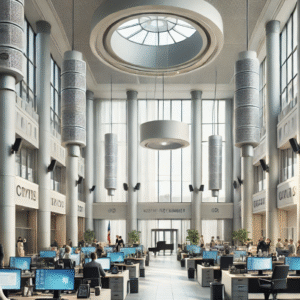
City governments across the world constantly look for innovative and effective ways to serve their constituents—building stronger communities, improving public safety, fostering civic pride, and ensuring clear communication. Among the many tools at their disposal, tower speakers—large, elevated loudspeaker systems placed strategically in public spaces—have served cities quietly but profoundly for decades. From punctual alerts of emergencies to celebratory announcements and accessible communication with underserved populations, tower speakers can be a cornerstone of modern, responsive city governance. This article explores why city governments should invest in tower speakers, underscoring their versatility, value, and enduring relevance in the digital age. Plus, we’ll weave in insights from recent municipal news to reinforce how real cities are making this investment today. 🎶
Benefits Beyond Noise – Why Tower Speakers Belong in Every City
Tower speakers are not just loudspeakers—they represent resilience, reach, and reassurance. Here’s why they matter:
-
Emergency Alerts & Public Safety: In moments of crisis—natural disasters, severe weather, chemical spills, or large-scale accidents—tower speakers deliver urgent messages in real time. Even when cellphone networks are overloaded or power lines down, these systems remain reliable, reaching wider audiences instantly.
-
Community Notifications & Local Engagement: From announcements of city events, curfews, or public meetings, to everyday reminders like garbage schedule changes or road closures, tower speakers ensure that all residents—including the elderly, low-income households without internet access, or non-English speakers—stay informed. This inclusive communication strengthens trust and cohesion.
-
Tourism & Cultural Vitality: Tourist-heavy zones or historical districts can benefit from tower-based audio, providing narrated walking tour directions or cultural context in multiple languages. This quiet, ambient enhancement deepens visitor experience and highlights local heritage.
-
Cost-Effective, Low-Maintenance Infrastructure: Compared to SMS alert systems or mobile apps—which require ongoing software updates, cellular agreements, and user adoption—tower speakers are durable, relatively inexpensive, and long-lasting. Once installed, they offer years of service with minimal upkeep.
Case in Point: Real Cities Investing in Tower Speakers
Here are snapshots of recent city news demonstrating how municipal governments are leveraging speaker towers:
-
In Los Angeles, officials launched a citywide retrofit of public address systems in parks and neighborhoods to improve real-time alerting during wildfires and heat waves—highlighting both disaster readiness and community outreach initiatives in recent news by the Los Angeles Times.
(Los Angeles public safety speaker system upgrade ) -
In Chicago, local authorities piloted an outdoor audio system in select neighborhoods to broadcast municipal announcements, local festivities, and public health updates. News coverage outlined how this initiative aims to bridge the digital divide and connect with residents facing barriers to smartphones or the internet.
(Chicago tower audio pilot tackles communication equity ) -
Tokyo’s metropolitan government recently reinforced its tsunami-warning network with high-power speaker nodes located throughout the city. Their upgrade ensures immediate outreach even when smartphones fail—news reported significant enhancements in public safety connectivity.
(Tokyo expands tsunami tower alert network )
These examples underscore how tower speaker systems are not relics—but dynamic tools for safety, equity, and efficiency.
Evaluating the Investment: Key Considerations for City Governments
When considering an investment in tower speakers, city planners should address several facets:
Technology & Design
Modern tower speaker systems differ greatly from their analog predecessors. They integrate:
-
Weatherproof hardware designed to resist rain, heat, and corrosion.
-
Redundant power options, such as solar backup or battery units, ensuring function during grid outages.
-
Multilingual voice synthesis or prerecorded messages, adaptable via central control software.
-
Integration with early-warning systems, ranging from sirens to digital networks, for synchronized messaging.
Choosing scalable, modular designs lets cities expand coverage without full replacement.
Equity & Inclusion
A core value of city governance is equity. Tower speakers—unlike digital alerts—reach:
-
Non-smartphone users, including low-income households or residents resistant to mobile tech.
-
Elderly or mobility-impaired individuals, who may miss alerts via social media or SMS.
-
Non-native speakers, via multilingual capabilities or simple tones paired with visuals.
City officials must map out optimal locations—public squares, transit hubs, parks, and neighborhoods with communication gaps—to maximize inclusive reach.
Cost‑Benefit Analysis
Initial capital costs encompass hardware, installation (poles, wiring, mounting), and system integration. However, compared to digital systems requiring continuous updates, subscriber fees, and marketing to drive adoption, tower speakers:
-
Have lower lifetime costs.
-
Require minimal technical staff for maintenance.
-
Offer durability, with parts lasting decades.
-
Enhance resilience in disasters when digital systems often fail.
A comparative framework should be established: list total cost of ownership across 5–10 years, factoring in reliability and inclusive coverage as intangible but vital gains.
Community Engagement & Transparency
Public trust grows when cities involve residents in planning. Before deployment, governments should:
-
Hold public consultations, allowing community members to voice concerns over volume, aesthetics, or placement.
-
Offer pilots in select neighborhoods, gathering feedback on sound clarity, frequency, and messaging styles.
-
Provide opt‑out mechanisms for non-emergency use—e.g., allowing residents to silence non-critical announcements at certain hours.
Transparency about message types and frequency helps avoid “noise fatigue” and builds acceptance.
Legal & Regulatory Factors
Some local ordinances may limit outdoor noise levels, permit processes, or historic district restrictions. City governments must:
-
Conduct sound impact assessments, ensuring decibel levels abide by local noise codes.
-
Collaborate with landmarks or zoning boards, especially in heritage areas, to ensure visual integration—e.g., camouflaged poles or decorative housings.
-
Establish clear messaging protocols, preventing misuse or “message creep” into commercial or political messaging.
Tower Speakers in the Digital Age: A Complement, Not a Competitor
In an era dominated by apps, social media, and SMS alerts, some may wonder: Are tower speakers still relevant? The answer is a resounding yes—and here’s why they work hand in hand with digital systems:
-
Redundant Reach: When cell towers fail or networks become congested during emergencies, physical audio systems remain reliable.
-
Broad Inclusivity: Not everyone has a smartphone or data plan. Speakers serve as a safety net that ensures no one is left uninformed.
-
Lower Barriers to Use: Instead of requiring installation, registration, or opt‑in, tower speakers deliver messages passively—ideal for tourists, recently arrived residents, or those wary of digital tools.
-
Instant Visual–Audio Synchrony: Public messaging can be paired with visual cues—sign boards, traffic lights, or electronic displays—for layered communication that reinforces clarity.
By positioning tower speakers as part of a multi‑channel strategy, cities build robust and layered communication networks.
Implementation Roadmap: From Decision to Deployment
Below is a step‑by‑step roadmap for city governments to bring tower speaker systems to life:
-
Needs Assessment & Coverage Mapping: Identify information gaps, high‑risk zones, and underserved communities. Overlay maps with cell coverage black spots.
-
Technology Scoping & Pilot Planning: Research vendors, define required features (e.g., multilingual messaging, solar backup), and plan pilot sites in a few neighborhoods.
-
Community Outreach: Host workshops or surveys, invite resident feedback, address concerns—especially around sound levels or aesthetics.
-
Procurement & Installation: Purchase hardware, coordinate installation with utility and public works departments, conduct sound testing across various conditions.
-
Integration & Training: Tie into emergency management systems (weather alert, police dispatch, traffic control), train city staff on message scheduling, testing protocols, and maintenance.
-
Public Launch & Education: Announce the system via town hall events, flyers, local media, and invite residents to learn how audio alerts will operate and what they’ll hear.
-
Monitoring & Evaluation: Track metrics such as alert response times, community surveys on message clarity, and technology uptime. Use these insights to optimize system coverage or messaging routines.
Conclusion
In a world brimming with digital gadgets and instant messaging, tower speakers may seem like a throwback—but they are anything but outdated. They embody resilience, inclusivity, and cost‑effective reach. For city governments committed to public safety, civic cohesion, equitable communication, and long-term value, investing in tower speaker systems is a decision well worth making. By deploying scalable, well-planned audio infrastructure, governments ensure no one is left uninformed—whether in times of crisis or celebration. Tower speakers are not just a public-address tool: they’re a powerful signal that every resident matters—and that the city is ready, both today and tomorrow.