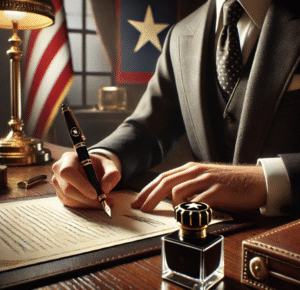
In the corridors of power—whether in parliaments, diplomatic offices, or presidential signing rooms—there is a persistent image that flickers through the public’s imagination: a statesperson reaching for an exquisitely crafted pen to put ink to paper on a historic document. Among the many brands that claim prestige, few evoke the same aura of gravitas as Montblanc, particularly vintage or “classic” pieces from the Meisterstück line. But why does this brand continue to capture the imaginations of government officials, even in a digital age? This article delves into the confluence of symbolism, tradition, craftsmanship, and politics that makes the vintage Montblanc pen more than just a writing instrument to many in public office.
The Allure of Symbolism and Status
One of the primary reasons government officials gravitate toward vintage Montblanc pens is the symbolic weight these pieces carry. A Montblanc Meisterstück, especially earlier models, is widely regarded as a luxury item that signals discernment, authority, and refinement. To hold such a pen suggests that one cares about more than the mere function of writing—it suggests a respect for heritage, elegance, and permanence.
This symbolic dimension is magnified in political settings. When a leader signs a pivotal piece of legislation, a treaty, or an executive order, that act becomes part of the public record. The pen used becomes almost a secondary artifact—imbued with legacy. It says, in silent but potent terms, “This document matters, and so I choose a tool of distinction to execute it.”
Additionally, vintage Montblancs have an air of timelessness. Unlike mass-market pens that might feel ephemeral or disposable, vintage Montblancs evoke continuity: they suggest a link between the past and present, reminding observers that those who govern are part of a larger historical thread.
Tradition, Protocol, and Diplomatic Practice
In government circles, tradition and protocol carry enormous weight. Many offices, especially in executive and diplomatic realms, have ceremonial norms that favor using high-end pens for “big moments.” Over time, Montblanc pens became entwined with those traditions, creating a self-reinforcing cycle: officials use them because prior officials used them, establishing a continuity of prestige.
Sometimes the choice is also about optics in diplomacy. When foreign dignitaries sign agreements or treaties, the tangible quality of the pen can matter. A vintage Montblanc, admired by collectors and connoisseurs worldwide, can signal mutual respect and seriousness of intent. In effect, it becomes part of the stagecraft of diplomacy.
There are even tales of governments gifting Montblancs to visiting leaders as tokens of respect—thereby normalizing their presence in diplomatic contexts. Over time, this further embeds the pen into the symbolics of statesmanship.
Craftsmanship, Longevity, and the Beauty of the Tool
Beyond symbolism and tradition, there is also the more concrete appeal of superb craftsmanship. Vintage Montblanc pens—especially early Meisterstück models—are often made of high quality materials, with finely tuned nibs and robust construction. They were built to last decades, and many still function beautifully today.
For a government official, a pen is not merely a decorative accessory—it may be used in signing many documents, budgets, memos, and agreements. A pen that feels reliable, well-balanced, and smooth conveys confidence in every stroke. In other words, the writing experience matters. A vintage Montblanc can feel significantly more satisfying than a generic pen.
Furthermore, using a vintage pen can be seen as a statement against disposability in an era of cheap throwaways. It suggests an appreciation for things that endure—and by extension, a political philosophy that values legacy, stability, and respect for institutions.
Political Branding, Legacy, and “Pen of Record” Appeal
For many public officials, their gestures contribute to how they will be remembered. The tools they use—down to the pen—become part of that narrative. Signing a major bill with a vintage Montblanc helps craft a certain aura: of cultured seriousness, gravitas, and discernment.
Some officials actively cultivate the image of being thoughtful, principled, and steeped in tradition. The vintage Montblanc complements that image. In photo ops, press releases, or archival documentation, the sight of a Montblanc can subtly reinforce the narrative that the officeholder respects history and treats their decisions with solemnity.
This is not mere vanity. Political communications teams often consider such details in staging moments. The image of a polished pen, a fine desk, a stately setting—all of it helps frame the official as someone who reveres the weight of the office.
Real-World Illustrations and Controversies
Although not every government official uses a vintage Montblanc, there are notable examples and even controversies tied to such pens.
For instance, former U.S. President John F. Kennedy was known to favor the Montblanc Meisterstück 149, and Montblanc later released a pen in his honor. Forbes Montblanc’s prestige and historical reputation have often linked it with high office and cultural elites. dreweatts.com
Conversely, there have been instances where the use of luxury pens by officials attracted scrutiny. In Germany, a “Montblanc affair” emerged when Members of Parliament (MdBs) were found to have purchased Montblanc pens using official stationery budgets. Some accused them of abusing public funds, though the purchases were technically allowed under existing rules. blogs.sussex.ac.uk That episode illustrates how the prestige of a pen can provoke questions about propriety, optics, and the line between symbolism and excess.
In another case, Montblanc pens have even appeared in criminal asset seizures tied to public corruption. When authorities pursued hidden assets in a scandal, they included luxury pens among seized items, underscoring how high-end writing instruments are sometimes entangled with political excess. Detroit News+1
Thus, the vintage Montblanc pen is not just a romantic relic—it is also a political symbol, sometimes contested and occasionally controversial.
Why Vintage Beats Modern or Generic Alternatives
One might ask: with all the modern pens, rollerballs, and digital tools available, why stick with a vintage Montblanc? Several factors help explain that choice:
-
Heritage and provenance: A vintage piece carries a story. Officials may value the lineage, serial number, or association with historical events.
-
Tactile richness: A vintage pen often has a more satisfying feel in hand, a nib that responds to pressure, and a weight that registers a sense of substance.
-
Distinctiveness: Many modern pens or gifts to governments are generic or mass-produced. A vintage Montblanc is comparatively rare and thus confers distinction.
-
Resistance to obsolescence: Unlike modern pens that may be molded plastic or tied to proprietary refills, many vintage Montblancs can be maintained, restored, and kept alive across decades.
In effect, a vintage Montblanc is both a tool and a token of taste—a convergence of utility and symbolism.
Beyond Borders: Global Use by Politicians and Officials
The appeal of vintage Montblanc is not limited to one country or political system. Many heads of state, ministers, diplomats, and high officials across the globe have been photographed or reputed to use Montblanc pens, especially in formal or ceremonial settings.
In many nations, having a “pen of state” is almost an unspoken protocol. Whether signing new laws, treaties, or inaugurating projects, a classic pen adds a layer of gravitas. In some diplomatic settings, counterparts will present Montblancs as ceremonial gifts. Because Montblanc enjoys a reputation for premium craftsmanship across many countries, it becomes a neutral yet prestigious choice in international diplomacy.
In short, Montblanc’s international brand recognition, combined with the vintage collector mystique, makes it a natural candidate for statesmen seeking continuity and universality.
Risks, Criticism and Modern Challenges
That said, the vintage Montblanc pen usage is not without downsides.
-
Cost and optics: In eras of fiscal austerity or public skepticism, using or purchasing luxury pens can draw criticism of elitism or excess (as seen in Germany’s pen expense controversies). blogs.sussex.ac.uk
-
Maintenance and functionality: Vintage pens require care, cleaning, and perhaps restoration. They may be less forgiving than modern pens. Some officials prefer more rugged, lower-maintenance alternatives.
-
Changing norms: As governments digitize and rely less on physical signatures, the frequency with which one uses a pen is declining. The pen becomes more ceremonial than functional.
-
Brand shifts: Certain public offices officially adopt particular pen brands or suppliers (for example, some governments standardize stationery procurement). In some cases, that limits the freedom to choose a Montblanc exclusively.
Despite these challenges, many officials persist in using vintage Montblancs because the symbolic and psychological rewards often outweigh practical inconveniences.
Conclusion
The prevalence of a vintage Montblanc pen among government officials is not a quirk of taste—it is a convergence of symbolism, tradition, craftsmanship, historic legacy, and political image. When an official signs a weighty document, the pen used becomes part of the narrative. A vintage Montblanc, with its storied brand, tactile refinement, and aura of permanence, offers more than utility—it conveys continuity, seriousness, and gravitas.
While in a modern era much of governance happens electronically or via digital signatures, the physical act of writing matters in high-stakes moments. In those moments, a vintage Montblanc speaks louder than ink: it signals that leadership respects legacy, cares about ritual, and engages the act of governance with dignity.
Whether or not one believes in the mystique of a pen, it is clear that for many public officials, vintage Montblancs remain a powerful cultural and symbolic tool in the theater of government. 😊