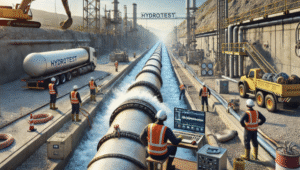
Pipelines are the arteries of modern civilization, transporting essential resources like oil, gas, and water across vast distances. Ensuring their integrity is paramount to public safety, environmental protection, and economic stability. One critical method for verifying pipeline integrity is hydrostatic testing—commonly known as hydrotesting. This process involves filling a pipeline with water, pressurizing it to a specified level, and monitoring for leaks or weaknesses.
Hydrotest pipeline businesses specialize in performing these tests and play a vital role in ensuring the safety and reliability of our nation’s pipeline infrastructure. However, these businesses face a unique set of challenges—including high operational costs, strict regulatory compliance, environmental scrutiny, and the ongoing need to adopt new technology.
To help overcome these obstacles and maintain the essential function they serve, hydrotest pipeline companies need government support. Strategic investment and policy alignment can ensure these companies thrive, ultimately strengthening America’s infrastructure, economy, and environmental safety.
The Importance of Hydrotesting in Pipeline Safety 🛠️
Hydrostatic testing is a non-destructive method of checking a pipeline’s structural integrity and leak-tightness. It is typically performed after new pipelines are installed or existing ones are repaired or modified. The method involves filling the pipeline with water, applying pressure higher than the pipeline’s operating pressure, and holding it for a specified duration while monitoring for leaks.
Hydrotesting is crucial for several reasons:
-
Public Safety: Detecting leaks or weaknesses before they result in a catastrophic failure is paramount. According to the U.S. Department of Transportation, pipeline accidents can lead to explosions, fires, and loss of life. Hydrotesting minimizes those risks.
-
Environmental Protection: Pipeline spills can devastate local ecosystems. The Environmental Protection Agency (EPA) notes that oil spills from pipelines are a major source of environmental pollution. Hydrotesting helps prevent these disasters by proactively identifying potential failure points.
-
Regulatory Compliance: Federal laws such as those enforced by the Pipeline and Hazardous Materials Safety Administration (PHMSA) require hydrostatic testing in many situations, especially for high-risk pipeline segments.
-
Asset Integrity Management: Regular hydrotesting extends the life of the pipeline by identifying and correcting defects before they escalate.
Major Challenges Facing Hydrotest Pipeline Businesses 🚧
Despite their importance, hydrotest pipeline businesses are burdened with challenges that limit their growth and efficiency.
1. High Operational Costs
Hydrotesting requires highly specialized equipment, trained personnel, transportation logistics, and large volumes of water. Costs are further increased by the need for safe disposal of test water and downtime during testing. Many small businesses struggle to cover these upfront costs, especially when competing for federal or large private sector contracts.
2. Regulatory Complexity
The regulatory environment is complex and ever-evolving. For example, PHMSA’s Title 49 CFR Part 192 Subpart J outlines detailed hydrotesting standards for gas pipelines. Maintaining compliance requires full-time regulatory staff or legal consultants—an expense that not all businesses can afford.
3. Rapid Technological Changes
Modern hydrotesting increasingly depends on digital sensors, automated pressure monitoring, and real-time data analysis. Companies must regularly invest in new technology to remain competitive and compliant. The costs of research and development or technology upgrades without financial aid can hinder innovation.
4. Environmental Regulations
Water acquisition, containment, and disposal must comply with EPA guidelines. Some regions even require special permits to withdraw or discharge large volumes of water. According to the National Pollutant Discharge Elimination System (NPDES), untreated discharge can lead to hefty fines. Navigating this maze of environmental rules requires legal and operational expertise.
5. Workforce Shortages
Many hydrotesting companies face difficulties hiring trained technicians. As the industry grows more sophisticated, finding individuals with both the technical and regulatory knowledge becomes harder. Without government-funded vocational programs, this skills gap could widen.
Why Government Support Is Essential 🏛️
To protect our national pipeline infrastructure and ensure safe energy distribution, the government must step in to support hydrotest businesses. Here’s how that support could make a transformational impact:
1. Financial Assistance and Tax Credits 💸
Government-backed grants, low-interest loans, and tax incentives would help companies:
-
Acquire and maintain advanced equipment
-
Offset travel and labor costs
-
Manage waste treatment and disposal more sustainably
Programs modeled after the Small Business Innovation Research (SBIR) program can support innovation while easing capital burdens.
2. Regulatory Reform and Simplification 📜
Streamlined regulatory processes with unified guidelines would significantly reduce administrative burden. The government could create centralized online platforms for compliance documentation and permit applications, saving thousands of hours annually for business owners.
Additionally, clearer compliance checklists and fewer redundant reporting obligations can enhance efficiency without compromising safety.
3. Environmental Guidance and Permitting Support 🌿
The EPA and state-level environmental departments can partner with hydrotest firms to provide clear, practical guidance for water usage and disposal. Government could also issue region-specific permits or fast-track options for companies using eco-friendly methods such as water recycling or biodegradable additives.
4. Technology Grants and R&D Incentives 🧪
Similar to energy efficiency programs under the Department of Energy (DOE), hydrotest companies could benefit from grants that fund the development of:
-
Low-volume water testing systems
-
Portable hydro units
-
AI-powered pressure analysis tools
Partnerships with universities, tech labs, and national agencies would accelerate innovation and adoption of new technology.
5. Workforce Development and Certification Programs 🧑🏭
The government can play a role in training the next generation of hydrotest specialists. Public-private partnerships with trade schools and engineering colleges could establish apprenticeship and certification programs aligned with PHMSA standards.
Federal initiatives like the Workforce Innovation and Opportunity Act (WIOA) could be tailored to pipeline safety industries, creating job pipelines in underserved communities.
6. Emergency Response Collaboration 🚨
Hydrotest firms can be key partners in national emergency preparedness. As part of the National Infrastructure Protection Plan (NIPP), hydrotest companies can provide rapid integrity assessments in the wake of natural disasters or cyberattacks on critical infrastructure. Government inclusion in these networks could provide funding and fast-track procurement contracts during emergencies.
Conclusion: A Public-Private Partnership Built for Safety 🤝
Hydrotest pipeline businesses are the unsung heroes of energy safety. They protect communities, prevent ecological disasters, and ensure that America’s vital pipeline infrastructure remains strong and resilient. But they can’t do it alone.
From crushing equipment costs to tangled regulations and the need for skilled workers, the challenges are real—and growing. With targeted government support, however, these challenges can be transformed into opportunities. Grants, streamlined policies, workforce development, and public-private innovation partnerships will create a more robust and secure future for everyone.
If America is to continue delivering safe, reliable energy across its vast terrain, supporting hydrotest pipeline businesses isn’t just smart policy—it’s essential strategy. Let’s invest in the safety and sustainability of tomorrow by empowering the businesses who test the pipelines of today.
🔗 Want to learn more? Explore these resources: